Monday, December 10, 2012

In the End...

Literacy is a very complicated yet very simple concept.  It is complicated because there are so many ways that a person can be literate, and literacy isn't just limited to written text.  To truly understand what literacy is, one must define what a text is.  For me, a text is anything that we glean information from.  For example, while having a conversation with someone, I can determine how they are reacting to what I am talking about by their tone, their body language, and their facial expressions.  Although reading people seems to be a natural skill, in fact, from when we were children we were learning to read and infer emotion from facial mannerisms.  

Literacy is a skill, plain and simple.

And like any skill, it must be practiced and sharpened.

From what I have mentioned above then hopefully we can assume that every content in high school has a literacy that they are trying to teach to their students.  In English, I believe that we tend to focus on various amount of literacies:  writing literacy, reading literacy, digital literacy, oral literacy, etc.

When reading, we want our students to be able to comprehend the text as well as critically reading it.  We can do a couple of things to assist our students' development of reading literacy.  For instance, when you are beginning a difficult text, model for the students your thinking process, especially when coming across a word that you don't know the definition.  This is an opportune time to show students how to use context clues.  To frontload a text, do a vocabulary lesson where you expose the students to vocabulary that they will encounter in the reading.  This will prepare them for the language that they will encounter in their reading as well as expand their personal vocabulary.

Digital literacy surprised me the most in this class.  Of course I had been exposed to using digital literacies in a classroom before but not in this context.  I wasn't aware of the simple activities we could do in a classroom that would promote looking at digital texts critically.  For example, one activity that I would use in my class was when we looked at a list of Google's top ten results and we had to sort them and infer the reliability of the site based on the title and URL.  This activity would be extremely useful when beginning a research paper.

Besides exposing me to the different literacies, this class has also given us many opportunities to discover our teaching style or beliefs about various aspects.  For example, the idea either allowing or not allowing ELLs to use their home language in the classroom.  Although I am of the opinion that, right now, English is the dominant professional language.  If one wants to get a job, graduate school, or go college, they need a foundation of English.  However, I feel that ELLs can use their home language to learn the content or gain a better understanding of the content.  I had the opportunity to work at the English Language Center and so many time did students talk to each other in their home language to explain a concept or explain what the words were that we were teaching them.

In the end what does this all mean?  Why did we spend fifteen weeks identifying different literacies?  Because we use them all the time.  There are some literacies that our students can develop on their own or at home, such as reading body language.  However, critical literacy skills are one of the skills that we learned with support from our teachers and having the safety of a classroom for trial and error.  Providing this environment as well as skills are key for being a successful educator.


Thursday, November 1, 2012

Let's Talk About...Using Vocabulary Strategies for Reading Strategies

Remember when we talked about vocabulary strategies in class?  Remember the Frayer model?  Where you split the paper up into four different boxes (definition, characteristics, examples, and non-examples)?  Ever thought about adapting it for a reading strategy?  My clinical teacher did.

In my English clinical class they were beginning to discuss Folklore and Urban Legends.  The students had a pretty dense reading that he had given them and as a reading strategy taught them the Frayer model.  I wasn't expecting this transition but after I saw him do it, it worked really well!  Especially when what they were reading was about one specific thing.  He drew it up on the board and then the students were to read, take notes, and create their own Frayer model.  Afterwards, they put together a class-created Frayer model.

I really liked how he did this because when a text is more informational/concept based texts, it gives students an opportunity to go through each section and "define" the information. (I could see this being difficult with novels...)

Now that I am talking about it, I realized that vocabulary strategies are just essentially reading strategies.  Yes there are some strategies that are use more for vocabulary quizzes and just knowing the words, but mostly where we are introduced to vocabulary necessary we find in informational texts.

The nice part about Frayer models (or most reading/vocab strategies) is that they are cross-media.  So I have teeny-tiny homework.  I challenge to whoever responds to this blog to, on a sheet of paper draw a Frayer model, and fill it in as you are watching the video about Natural Selection (you might have to watch it once or twice, it is just that epic).  Then in your comment just leave a little blurb about what you got in each section.

Okay, I know I am an English major, but I can still enjoy this pretty awesome video!  And Biology majors...no cheating!

Wednesday, October 17, 2012

How do You Express Yourself?

In today's world, in order to properly express yourself you need to be able to write.  Whether it's Facebook updates, tweets, or texts, we are now coming into a world where writing is an even more important form of communication.  Being an English major, one would think that I like to write or that I'm good at it; ironically it's not my favorite thing to do and sometimes I do struggle when writing.

Rather than write poems or stories to express my ideas, I prefer images over words.  However, the process of photography is similar to the process of writing.  Before you even begin snapping photos, I feel that one has to figure out where you are going and what you will find when you get there.  Furthermore, you have to figure out why you are going out and taking photography, in writing this is figuring out your audience and determining your argument.  When taking a photograph, you want to try different lenses or angles to try to find a unique angle that catches the attention of the viewer.  Then after spending hours taking hundreds of photos, you must go through and pick ones that are actually worth editing.  Sometimes it is a serious struggle to determine between two similar photographs which one is worth your immediate attention.  Then comes the editing process:  bringing out contrast, softening edges, brightening, darkening, cropping.  In writing, I would consider this to be a combination between the editing and revising processes.  

A couple of years ago I grabbed my camera and a couple of friends and headed to the graveyard near campus.  It was ideal out:  Fall had begun, leaves were on the ground, and it was sprinkling.  We spent hours wandering around the graveyard taking photos of each other and interesting artifacts left by visitors.  Then, cold and wet, we trudged back home and I immediately loaded my memory card and sifted through my hundreds of photographs.  For that one trip, I came out with about ten edited photographs from my couple hundred raw images.  There are many different editing programs online, at the time my favorite is FotoFlexer.  It may seem easy, but I feel that editing photos is one of the most important part to photography.  I don't use editing to fix my photo, but rather enhance it.  After hours of work I got something like this:

This is my favorite photograph that I've ever taken.

Throughout my lifetime, I've discovered that I prefer recreational photography rather than assigned; this is the same for my writing.  If it's something assigned I find myself not as invested in the writing which in turn reflects writing that is not my best.  When I get the urge to write, you usually don't see me for days.  I'll stay holed up somewhere just to get as much of the story out as I can.  I say "out" and not "written down" because I have this nasty habit of not finishing my stories.  I think through my stories that I don't want to write them down because I already know how they end.  My problem with writing is that I don't have the discipline to schedule out a time so I can sit down and work on whatever I am writing.

Earlier I mentioned that I find myself a better recreational writer, however I do appreciate it when my teachers or instructors expect a piece of writing from me.  I found that I actually enjoyed my short stories I wrote for my fictional writing class, even if I found myself loathing sitting down to write it.  I even find myself disliking updating my Facebook status; there are days where I just don't have anything insightful to say and I hate putting up pointless posts.  

I feel that bringing this perspective to my classroom will yield a very interesting writing program in my classroom.  I think I'm going to have the students primarily write on topics they want to write.  There will, of course, be times where I need them to write on a specific thing.  However, I feel that in real life, we write on what interests us.  I think being invested in what you write on is one of the best ways to craft a quality paper. I want my students to want to express themselves, and if some express themselves best through photography, Facebook posts, or stories I want to promote that in my classroom.

Wednesday, October 3, 2012

Let's talk about English...

Hello students,

Welcome to your English class.  I am very excited for you to be in this class where you get to read a lot of exciting texts.

First off, I want to point out that English is not just reading books.  Do you guys like to read comics or magazines.  How about spending time on Facebook or Twitter?  How about listening to music?  I am sure we all have a favorite band or type of music?  What draws you to that music?  Is it just the beat or do you find yourself relating to the lyrics?  How about art?

Well everything that I just mentioned we will be talking about in our class.  That is why English is so awesome, it's so versatile.  The skills you'll learn in this class can be used anywhere.

I've always loved reading, I've got a list of about 35-40 books that are on my bookshelves waiting to be read.  There's a whole other world in those books; worlds I can escape to and worlds I can learn from.  The magic about books is that they are extremely versatile.  There are books out there that can help you cook and some that make you think.

Let's do a quick little exercise, not that hard, just a small exercise.


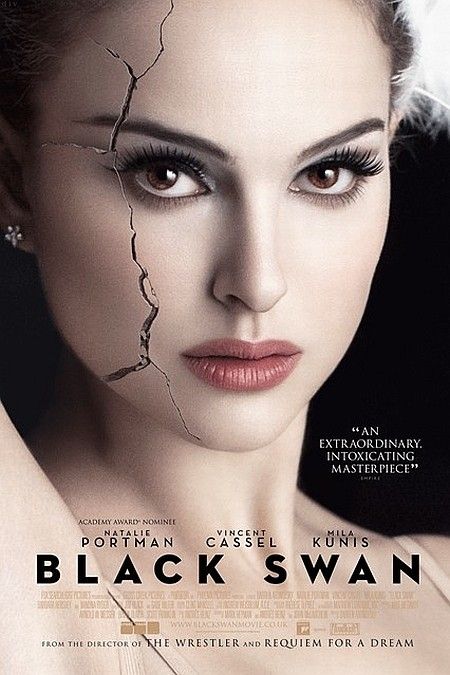
On a scrap of paper I want you to first list what you see in this picture.  Then, next to your list, quickly jot down a few words that come to mind when think of that word.  From your new words, and looking at this picture, quickly jot down what you think the the character is going to be like?  From that, guess what the premise of the movie is.

Did you do it?  What did you get?  How fast did that take you?  Not that long to analyze a photo huh?

Here's what I got when I did this exercise:

Beautiful woman- Porcelain white, like a doll, ideal features, 
Crack- Broken, crazy, disfigured, fractures
Contrast between black and white- pale white vs black background, standing out, she takes up most of the image, pushing the black behind her (wanting to be center of attention?)

I believe that this character is a ideological woman who has almost everything she wants, or she desires to be the center of attention.  However, there is either an internal or external force that is breaking this perfect image.  There is also something in her eyes that is slightly dangerous, it's not prominent but it's there.


Now do the same thing to the photo below:

Speak by Laurie Halse Anderson

Did you know that you just predicted the story of Speak, or at least started profiling the main character.  Predicting a story by looking at clues a huge part of analyzing.  We do it when determining what a movie is going to be like from the previews or posters.  We do the same thing with books.  You know the phrase "Never judge a book by its cover"?  Well I do, I can learn a lot just from the cover of the book, I do it to comics and graphic novels as well.  With pages filled with images, there are tons of images and ideas presented.

Next time you are flipping through a magazine, stop and look at the adds and do this same exercise.  Then I want you to think about what ideas or images to advertiser are trying to get across.

English is not just about books.  The skills that I hope to impart on you are not just about reading one of Shakespeare's dramas or why you have to write a research paper (though we will be doing those too); English is about learning to read your world, your surroundings, and to help you make sense of it.

Monday, September 3, 2012

Life, Literacy, and the Pursuit of Nerd-dom

Hey everybody!  Welcome to my blogger page!  If you aren't here for SCED 4200 you might not find this blog to interesting, but if you do, more power to you!

Well to begin, my name is Samantha, I'm currently a super senior (just started my fifth year, go me!) who is majoring in English education and minoring in Psych education- an interesting combination I know, I just had so much fun in my psych 1010 class that I wanted to pursue it more.  Before I knew it, I needed an education minor to go with my major and conveniently I had taken a few psych courses so, voila!

I consider photography a minor hobby of mine.  I prefer to take photos of nature and abstract rather than take photos of people...okay, more potrait photos, I wouldn't mind taking random photos of people, where they aren't the focus of the photo, or posed.  I'm actually hoping for a DSLR for graduation this year (super expensive so it's a big hope) but I think it'd be so much fun to have one, and then I could turn a minor hobby into a major one.


Besides photography, one of my favorite past-times is reading, which is one of the reasons why I decided to become and English major, and then other reasons propelled me into the education tract.  These reasons being that I always enjoyed English is school, I actually enjoyed so much, I ended up lettering in English my senior year.  You must be thinking, lettering in English? Nerd!, well you're right.  I embrace my nerdiness, and if you ever need any suggestions for TV shows (Doctor Who, Sherlock, Firefly), games (Skyrim, Fallout 3), or movies (V for Vendetta, Paprika), come find me!  To further show you how much of a nerd I am, one of the reasons why I chose the education track in English is because I like school, I never could picture myself not being a student or not being in school. (I figure a good portion of you actually like school too, which is why we are all in this class together!)

To say that there is no literacy in English would be ludicrous.  However, I believe that literacy is huge in every aspect of your life!  My personal definition of literacy is being able to read and understand (this includes critically reading) a text.  I believe that it is content based as well.  As an English major, I can say that I can read a paper about literature and feel confident that I can get the gist of it.  However, if I try to read a BioChem paper, my eyes would just glaze over as I quickly give up trying to understand a thing about the paper.  I don't have the experience or knowledge about the subject in order to fully understand what it is trying to say.  

Here's another weird thing about me, I'm actually looking forward to keeping a blog...I have another blog...with about three posts on it.  Might I just say, I'm not to skilled at keeping things like this updated and I really want to get my other one up and running...